
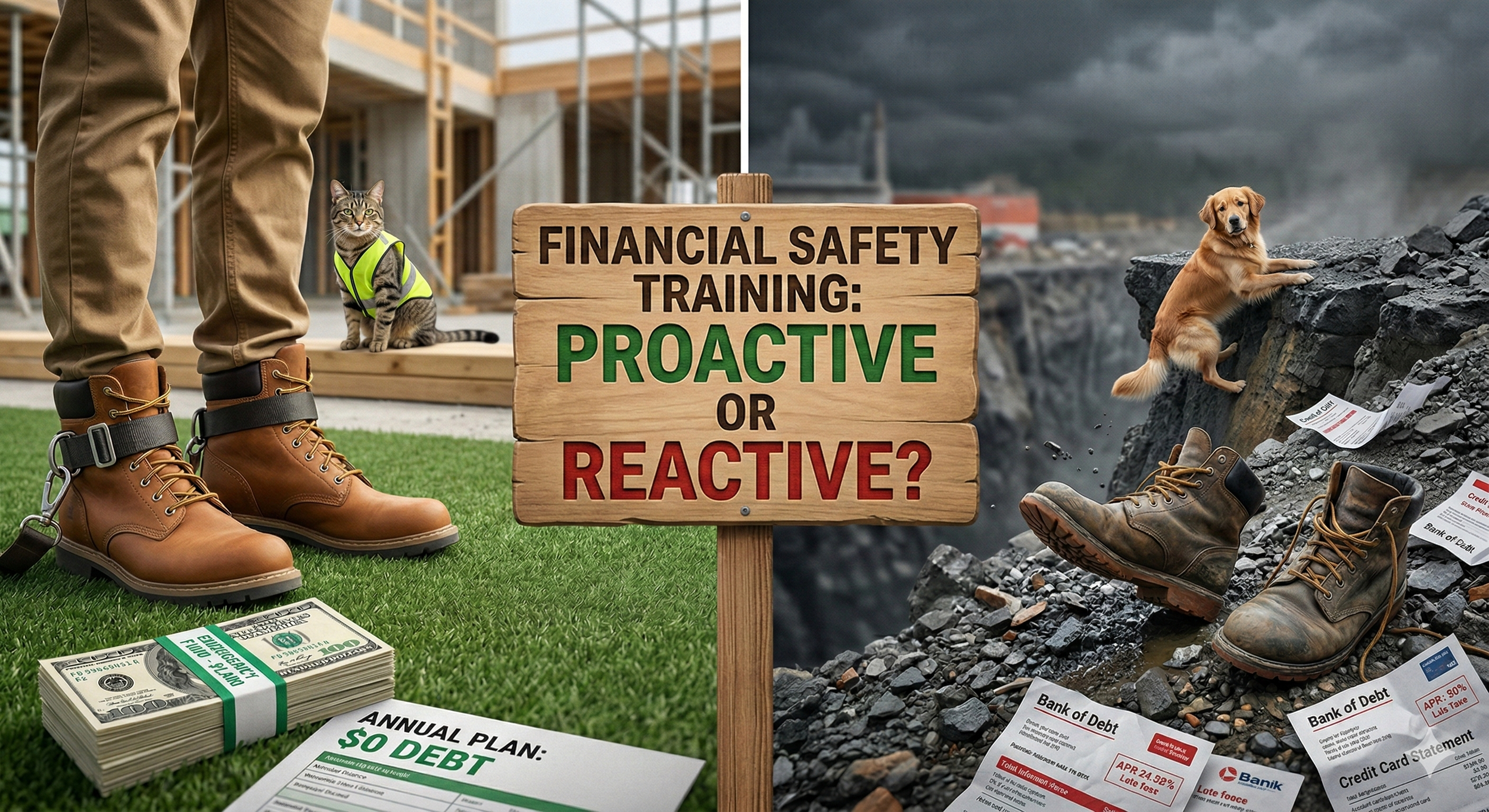
Every three years, like clockwork, I have to renew my Work at Heights (WAH) certification. It’s mandated by the government for everyone in construction. The reasoning isn't optional or debatable: Falls are the number one cause of fatalities in the industry.
This training focuses on one crucial goal: ensuring you don't fall, or, if you do, that you have the right safety gear (the harnesses, ropes, and anchoring points), to stop the fall before it's too late.
During my last session, a thought crossed my mind about that old saying: "Cats have nine lives and always land on their feet."
When it comes to your financial health, you want to be that cat. You want the agility and the preparation to handle a sudden stumble—a lost job, an unexpected medical bill, or a major car repair—and still land upright.
But what about dogs? Dogs are loyal, energetic, and wonderful, but they aren’t known for their innate ability to land perfectly from a fall. Without training and safety precautions, a simple mistake can be serious. This leads to a powerful analogy for our personal finances.
What is the #1 Cause of "Financial Fatality"?
The WAH training exists because the statistics on falls are stark. So, if we translate this to the world of personal finance, what is the number one factor that causes families the most distress, trouble, and long-term harm?
What is the "leading cause of death" in a family’s budget?
The answer, for the vast majority of people, is high-interest consumer debt.
This is the equivalent of working on a 20-story building without a harness. It’s seductive at first. It allows you to get things now, but the interest rates (especially on credit cards) can be punishing. When that debt compounds, a single misstep (a reduced paycheck, a dynamic bill) can cause a financial freefall. A debt "fall" can wipe out savings, damage your credit for years, and create immense stress.
The Problem: We Only Review When We’re Falling
The biggest difference between construction and finance is how we approach safety. In construction, the safety review (the WAH training) is proactive and mandatory. You do it before you step onto the site.
In personal finance, too many people only review their "safety protocols" when they are already in a freefall.
The Solution: Your Mandatory Annual Review
If the government mandates safety training every three years to keep people from physically falling, why don’t we treat our financial lives with the same seriousness?
You need a systematic "safety check" for your money. But unlike the WAH requirement of every three years, your finances ought to be reviewed every single year.
Life changes quickly. Your career moves, your family grows, interest rates fluctuate, and your goals shift. A plan from three years ago is likely obsolete.
How to Build Your Financial Harness
A yearly financial review is like checking your WAH equipment. Here’s what we look at to ensure you are a financial cat who lands on their feet:
Check Your Anchors (The Emergency Fund): This is your primary safety net. Does your emergency fund cover 3–6 months of expenses? Is it anchored in an accessible, low-risk account?
Inspect Your Rope (Your Debt Management Plan): Are you carrying high-interest debt (like credit cards)? A proper review will build a clear, aggressive strategy to pay that off eliminating the biggest risk factor for a catastrophic fall.
Tighten Your Harness (Insurance and Estate Planning): Are you correctly protected? This means reviewing your life, critical illness, disability, and health insurance, as well as updating your will or trust. These are your ultimate backups if your primary safety measures fail.
Calibrate Your Equipment (Retirement & Investments): Is your asset allocation still right for your age and goals? Are you maximizing your tax-advantaged accounts? A yearly review ensures your gear is optimized for the path ahead.
Conclusion
Let’s schedule your safety briefing. We want you to be the cat. We want you agile and prepared.
Don’t wait for a financial stumble to check your equipment. A WAH training is about preventing a physical catastrophe. An annual financial review is about preventing a financial one.
If it’s been more than a year since you sat down and looked at your entire plan, let’s schedule that check-up today. Reach out to our office. We are happy to help.